By Lori A. Mann
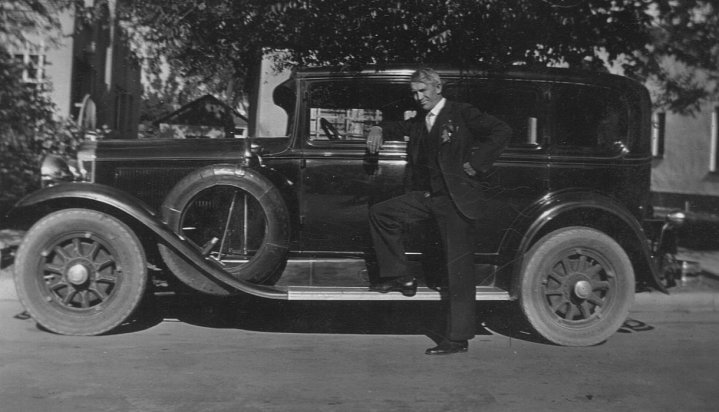
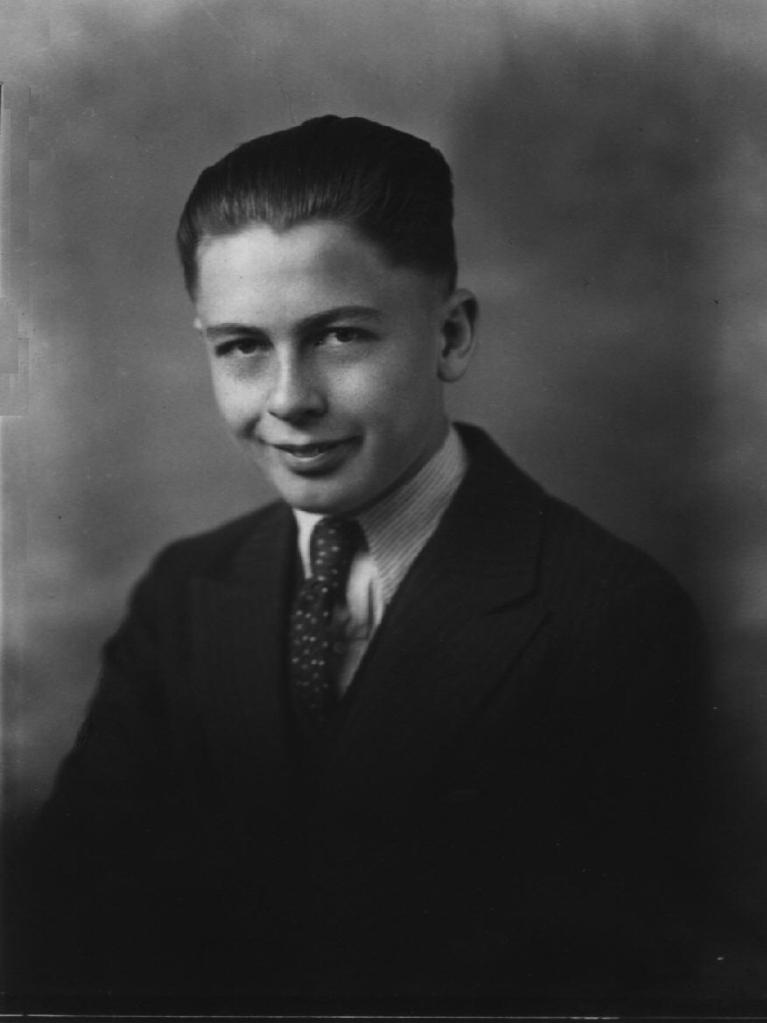
My grandfather died when I was very young, and yet, he is etched in my memory. His contributions to the city of Albuquerque were notable, significant, and not to be forgotten. My grandfather, Albert (“Bert”) James Exter, passed away when I was barely seven years old. My mother rarely spoke of him, for reasons I can only imagine were too painful for her. She was devastated by his loss. She had also developed multiple sclerosis when I was a young child. It wasn’t until my late thirties that I began researching my family history and truly came to understand—and be awed by—his accomplishments, business acumen, and lasting contributions to the community.
I am often asked why I feel compelled to write about my grandfather, and what it is that makes his life so important. My answer is that I feel a deep responsibility to tell the story of a man who left a strong impression on me at a very young age, through family recollections and through the many stories and articles I have since read about him. As I learned more, I felt transported into a different era and gained a deeper understanding of both the man and the time in which he lived.
This story is largely about history. My grandfather is part of the history of both the City of Albuquerque and the State of New Mexico. History can be lost if it is not documented and preserved. Just as importantly, he is an integral part of my family’s history—one I hope all of his descendants will feel pride in. His contributions mattered, and if ever there were a story worth telling, it is my grandfather’s.
By all accounts, Bert Exter was a true mover and shaker. In an email exchange with Nasario Garcia, author of Albuquerque Feliz Cumpleaños: Three Centuries to Remember, Mr. Garcia remarked that my grandfather “contributed to the richness of Albuquerque.” His name was frequently mentioned in connection with nominations to run for county commissioner. According to my cousin, Lauren Exter—Bert’s oldest grandchild, who remembers him well—when asked why he never ran for office, Bert explained that he preferred to stay behind the scenes, making things happen rather than step into the limelight. And that is exactly what he did.
Early History
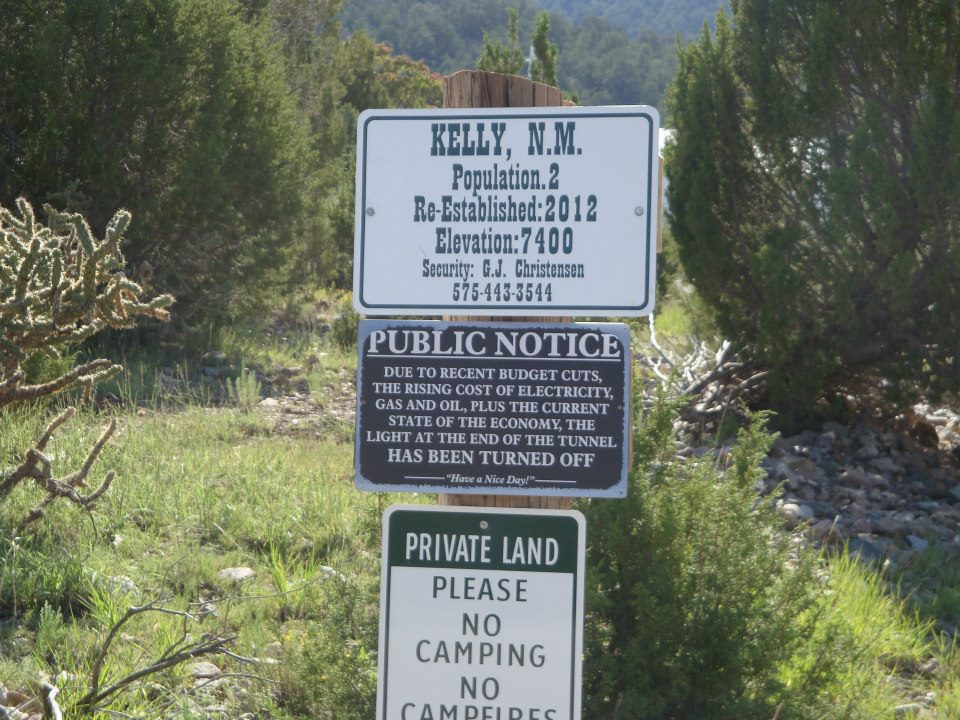
Bert was born in Kelly, New Mexico, on July 7, 1891, to Simeon and Mary Elizabeth (James) Exter. Kelly is now a ghost town and was three miles south of Magdalena, New Mexico. It was a booming mining town with approximately 3,000 residents at its peak. Bert entered the industry at just nine years old. His parents, Simeon and Mary Elizabeth, traveled to Socorro County from Perranzabuloe, Cornwall, England, in 1892. Mines were drying up and closing in England, and many miners were coming to the States from England. Simeon was a foreman of the Kelly Magdalena mining district. He discovered the original zinc lode, from which a booming mining industry thrived for many years. In fact, Kelly became the state’s leading producer of zinc. From 1904 to 1928 over $21M of zinc was mined. Gradually, mining throughout the district declined and by 1947, the last remaining residents relocated to Magdalena, New Mexico. As of 2012, Kelly had a population of two. Note: The family photographs of Kelly during its heyday have been adopted by the Albuquerque Museum and the Palace of Governors archives.
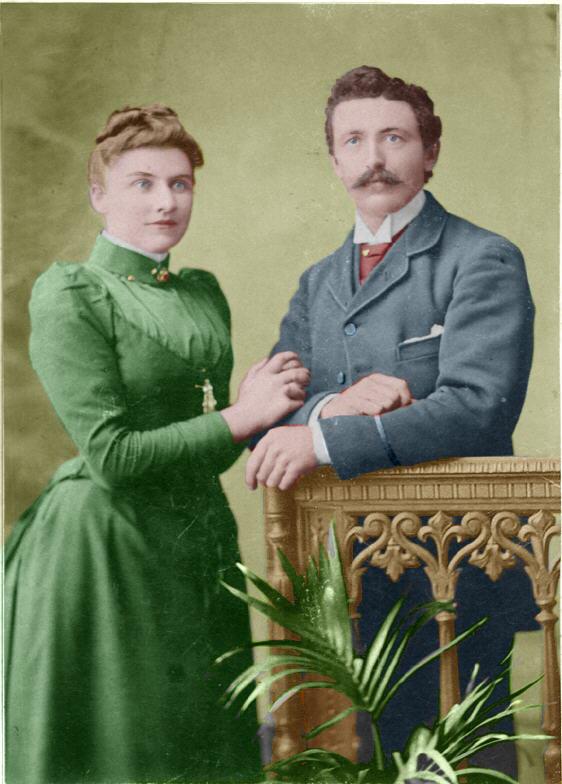
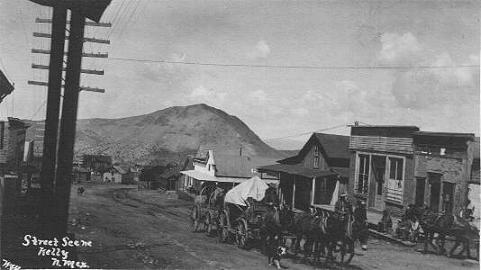
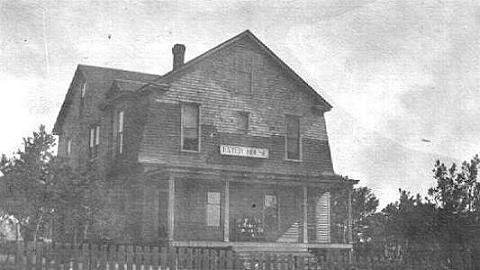
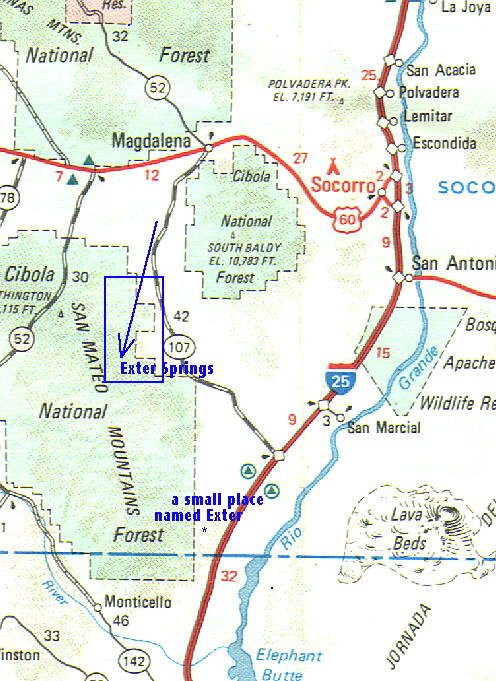
After the death of Simeon in 1906, his wife, Mary ran a boarding house in Kelly. It was not uncommon for widowed or abandoned women to repurpose the family home into a boarding house in the 19th and early 20th centuries, one of the few socially acceptable options they had to support themselves. Bert quit school to help support his mother, sister, and brother. He became a mechanical engineer at Kelly and then ventured into Albuquerque in 1919, during the time of the Spanish Influenza, the second deadliest pandemic in history, with COVID-19 deaths now surpassing the approximately 675,000 Spanish Flu deaths.
This period led Bert to another type of digging and a lifelong career. What began as an apprenticeship with Chester French, one of Albuquerque’s pioneer funeral directors, led Bert to become a licensed embalmer in late 1919. He continued his association with French until 1926, when he left to organize the Model Casket Company and established his own funeral home at 216 S. Arno in 1929, thus creating the first single-purpose funeral home in New Mexico. A single-purpose funeral home has a clearly stated purpose and does not combine business with any other. For example, the Strong family combined the mortuary business with their existing furniture business.
Exter-Blakemore Mortuary and First Air Ambulance Service
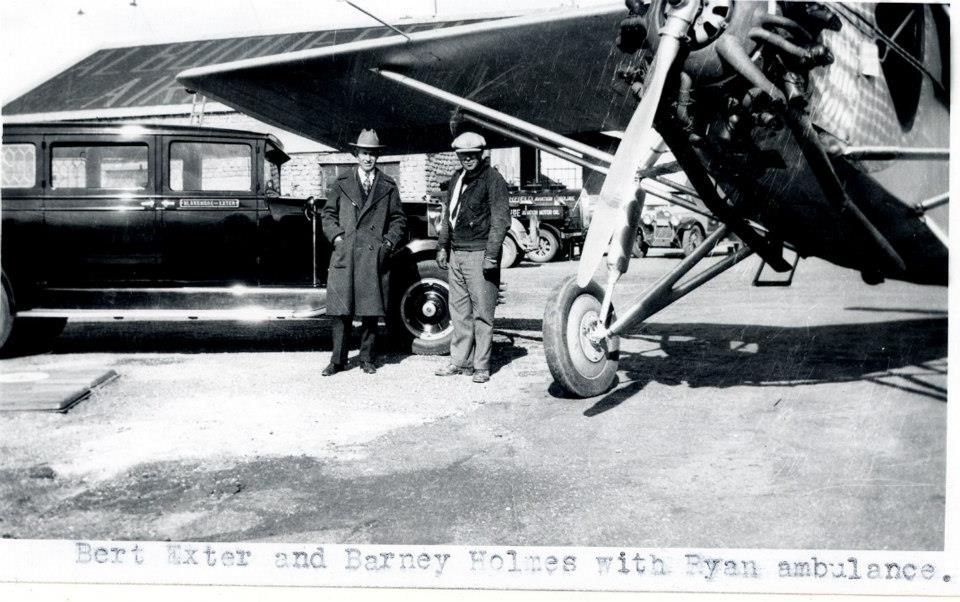
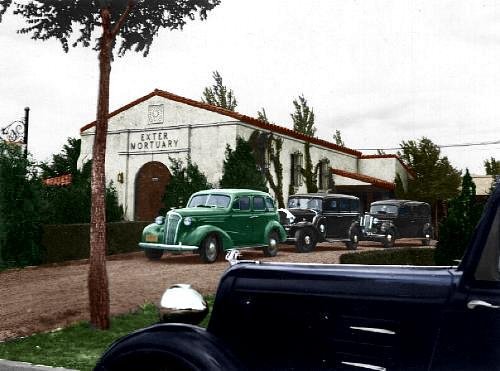
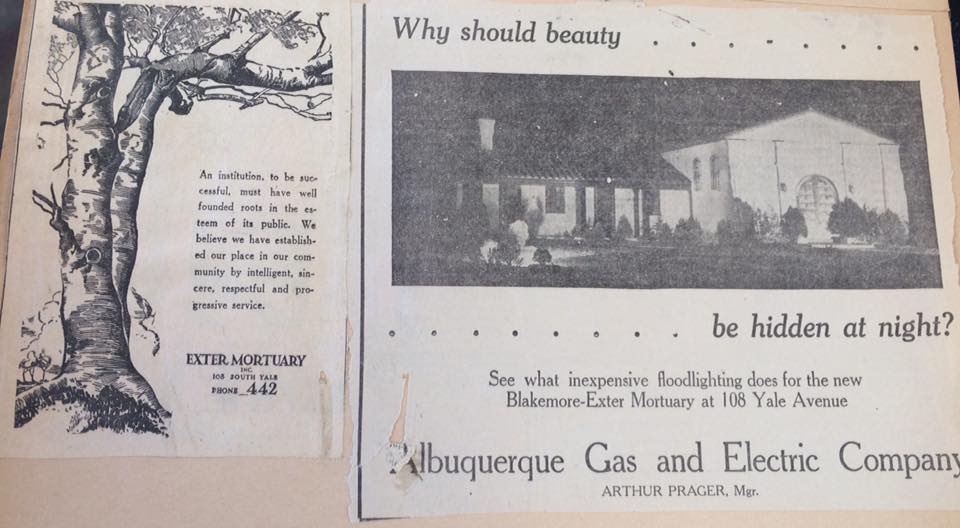
In 1929, Bert began a partnership with Albert (“Bert”) J. Blakemore to operate the Blakemore-Exter Mortuary. By 1934, Bert and his partner moved the funeral home to 108 Yale Street SE. The mortuary was the most modern one in the United States at the time, with state-of-the-art equipment and sound piped throughout the building. It is now the McDonald’s parking lot at the corner of Central and Yale in Albuquerque.
During their partnership, both Bert’s collaborated with Bill Cutter, owner of Cutter Flying Service, to establish the first air ambulance service. The flight saved Mrs. Mary Craft’s life. She was suffering from a “paralytle disease” and needed to be transported to a lower altitude to recover. The two-hour and forty-five-minute flight got her safely to Stratford, Texas, where she could receive appropriate treatment and be cared for by her son.2 See http://www.historicabq.org/1929-air-ambulance-service.html.
In an Albuquerque Journal advertisement dated June 17, 1930, Blakemore-Exter stated, “Much outside publicity has been given our service, and with it, Albuquerque ranks with cities many times its size.”
.
Exter-Tonella Mortuary
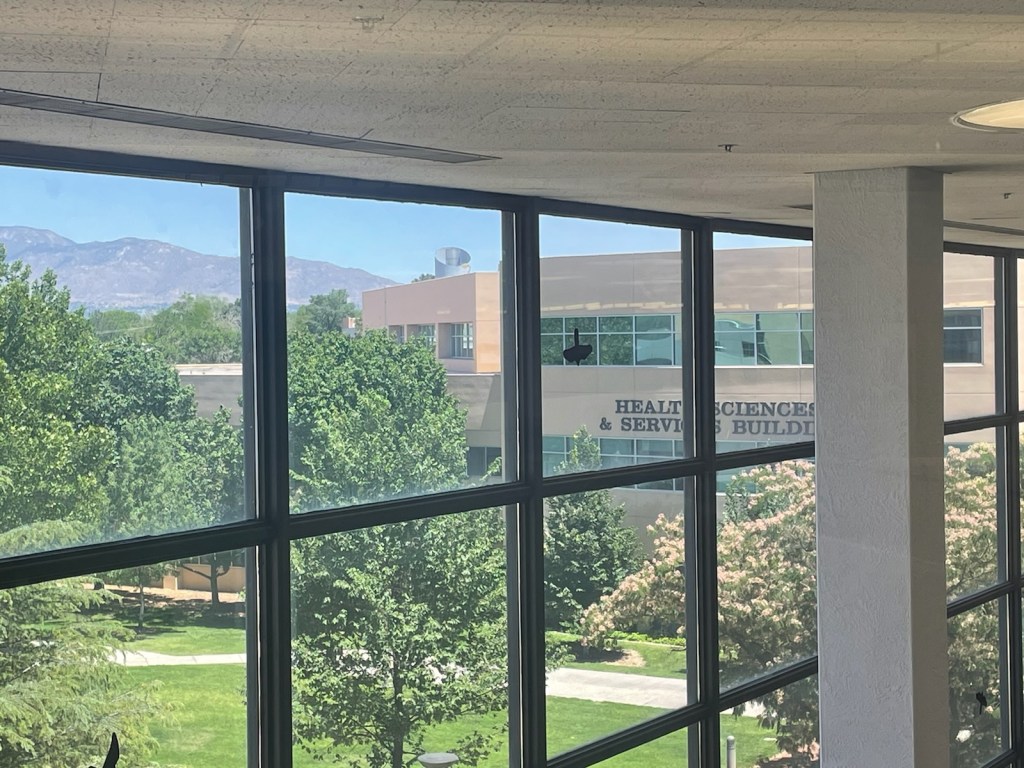
Bert was the sole owner of Exter Mortuary from 1936 until 1953, when he began a partnership with John F. Tonella and operated the Exter-Tonella Mortuary at 930 Stanford NE in Albuquerque. John Tonella came to Albuquerque from the Canale-Tonella funeral home in Marquette, Michigan. In 1955, Bert was cited as “the most useful funeral director in New Mexico for the worth to the association, his profession, and to the community.”3 The funeral home was “designed to get away from the depressing purple and other funeral colors commonly associated with a mortuar,y” with a “homelike atmosphere” in the reception room and foyer, and a chapel designed for any type of religious service, as well as a private room for mourners,4 clearly paving the way for more modern-day funeral homes. Exter-Tonella operated until Bert died in 1963. John Tonella eventually sold the business to the University of New Mexico (UNM) for $265,000, which is equivalent to $2.46M today. UNM initially held medical classes in the building, and it later became the Health Services and Sciences Building.
Community Contributions
In addition to being a successful businessman, Bert Exter either led or partnered on various community activities, to which he contributed both his time and finances. He had a vision, and Albuquerque benefited from it.
Lions Club
Bert was president of the Lions Club and had a record of nearly 40 years of unbroken attendance. He also served as an International Counselor and District Governor of the 19th District of Lions International.5 He became fluent in Spanish, from growing up in Kelly and from speaking with the many clients he served, enabling him to deliver an entire address to the Juarez Lions Club in Spanish.
Three Major City Projects
Bert possessed remarkable vision and drive. Through his involvement with the Lions Club, combined with his effective and dynamic leadership, he became the prime mover behind three significant civic projects. Recognizing the need for a municipal airport, Bert was appointed chairman of a committee charged with launching a program for its establishment. The committee’s work in 1929 ultimately led to the development of the Albuquerque Municipal Airport.
In March 1934, following the kidnapping of a police officer, Officer Mariano Werner, Bert again identified a critical community need—this time for a two-way police radio system. He led a committee to develop the system, and within six months, the committee’s recommendations were adopted.
As if that were not enough, Bert later initiated a movement within the Lions Club to create Albuquerque’s first municipal golf course. The course was successfully laid out in 1936–1937, further reflecting his lasting impact on the city..6
Boards and Associations
Bert actively chaired or served on several boards during his lifetime, including:
- President of the New Mexico Funeral Directors Association from 1933 to 1935
- Past President of the Better Business Bureau from 1951-1955 and an organizer of the Albuquerque Community Chest.
- Chairman of the local Salvation Army Board from 1955-1956 and board member of the Employment Security Commission of the State of New Mexico.
- Board member of the Albuquerque Chamber of Commerce.
- Chairman of the New Mexico Safety Council, co-author of the New Mexico Driver’s License Law, and author of the New Mexico Safety Commission Law.
Other Contributions:
- In 1936, he helped organize the school Patrol System and financed it alone for the first two years.
- From 1927 to 1941, he served on the advisory board of the International Order of DeMolay.
- Bert served five years on the Selective Service local board and, for ten years, was Chairman of the Bernalillo County Charity Commission.
- Bert was supportive of the Boy Scouts. He was a member of the Executive Board of the Kit Carson Council and a recipient of the Silver Beaver Award,
- Last but not least, Bert was a member of the Rio Grande Sewer House Ditch Catfishing Society. Numerous newspaper articles about this lively group describe some fun antics, including liar’s contests that would have members winning “liar’s trophies” for telling the biggest stories, and Bert was a winner on more than one occasion. This was an activity where he showcased his sense of humor.
First Harley-Davidson Shop
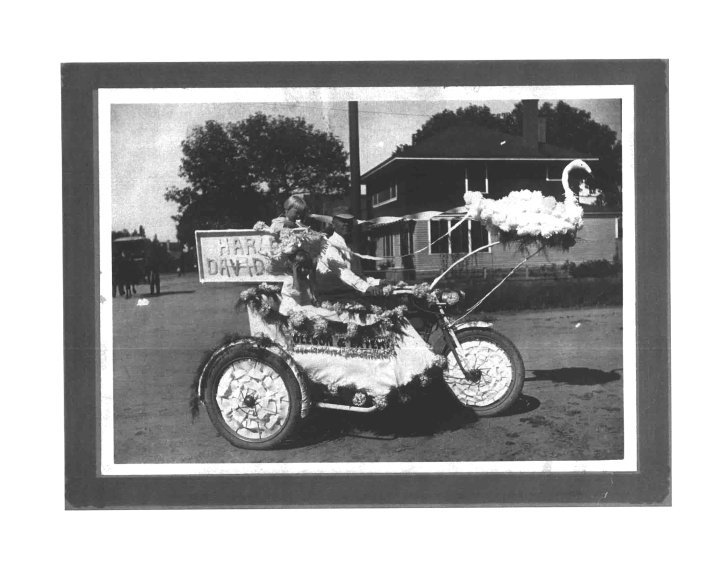
There is little detailed documentation about Bert and his brother-in-law, Ole Oleson, partnering to operate Albuquerque’s first Harley-Davidson dealership, beyond family stories and city directories. Those records list the business as the Albuquerque Bike Shop, located on Fourth Street around 1919. At the time, motorcycles were still quite new and considered a novelty. Bert’s daughter—my Aunt Shirley—was said to have designed a Harley-Davidson logo for the shop, which they patented during that period.
Family Life
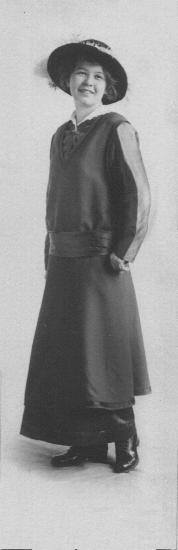
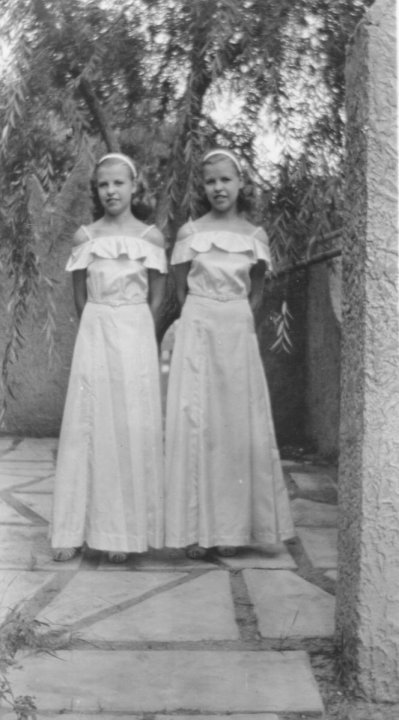
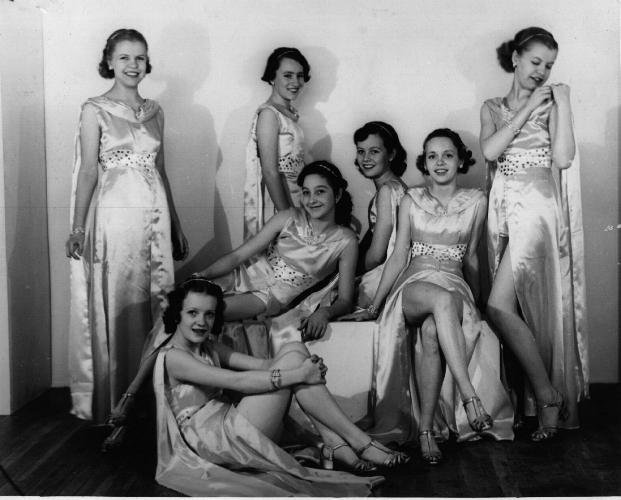
Bert married Mabel Oleson (10/29/1892-8/12/1960), also from Kelly, in 1913. Bert and Mabel had three children: Thelbert Exter (8/9/1913 -5/31/1992), and identical twins, Kathryn, my mother (12/15/1920-6/27/1980), and Shirley (12/15/1920-10/20/1999). Locally known as the “Exter twins,” my mother and her sister took dance lessons through Kinslow Dance Studios and performed at numerous local events, including shows at the Sunshine and Kimo theaters, as well as the Albuquerque Little Theatre. My grandmother, Mabel, was a skilled seamstress and made all of the twins’ dance costumes. She also served as an editor for the book Meet Mr. Grizzly, written by Montague Stevens, a cattle rancher in New Mexico.
After Bert: A House Without Light
Following the death of my grandmother, Mabel, in 1960, Bert remarried. During my grandmother’s long illness, an on-site nurse, Elizabeth “Lizzie” Ward, had assisted with her care, and Bert married Lizzie about a year after my grandmother passed away. I remember that she was not well-liked, and as a child, I recall being somewhat afraid of her.
After my grandfather died in 1963, a difficult and painful estate battle followed. I recall my father telling me that when the family was finally able to enter my grandfather’s home, it had been stripped of everything—even the light bulbs. Lizzie had taken family heirlooms and much of Bert’s hard-earned fortune, including the dresses my grandmother had sewn for my mother and aunt to wear in their dance performances. Sadly, history would later repeat itself with the passing of my father—but that is a story for another day.
A Life From Candlelight to Satellite
Much has been written about my grandfather’s business successes and accomplishments here. While they are impressive, even more remarkable were his spirit and character. He was generous and giving by nature, strategic in his thinking, and always able to see the bigger picture. My cousin Lauren Exter, who greatly admired Bert, often spoke of his extraordinary attitude toward death and his wonderful sense of humor. He mentored and guided countless people, and he maintained strong, respectful relationships even with his competitors.
To this day, people in the business community still know who Bert Exter was. His character is his legacy. He was known to accept in-kind payments for his services, graciously taking gifts instead of money, and throughout many of his ventures, he chose to operate as a silent partner. He did not seek accolades or recognition; instead, he took quiet pride in seeing things accomplished. My cousin Lauren once shared that Bert said he had lived from “candlelight to satellite.” Lauren also recalled the remarkable turnout at his funeral—standing room only—with members of the Albuquerque Police Department volunteering, almost to a man, to serve in his honor. He spoke, too, of watching the people of Albuquerque—those Bert had helped, supported, and guided—pause almost invariably at his coffin to briefly hold his hand. That sight moved him deeply.
Although I was very young when my grandfather passed away, I still remember his warm smile and the unmistakable feeling of love I sensed whenever he was near. His kind and gentle spirit has somehow stayed with me throughout the years. He passed away on Father’s Day, June 16, 1963.
Thanks to: Mo Palmer and Susan Drake Schwartz for editing.
Thanks to family contributors: Lauren Exter, Robert Exter, Janice Atchley, and Brandon Carroll
Special thanks to Diane Schaller of Historic Albuquerque Inc. for the many wonderful news articles she has provided to me.
Footnotes
- Albuquerque Journal article dated October 19, 1938
- Albuquerque Journal articles dated November 6 and 7, 1929
- Albuquerque Tribune article dated April 27, 1955
- Albuquerque Tribune article dated August 24, 1957
- Albuquerque Journal article dated May 26, 1948
- History of New Mexico, Family and Personal History, Vol. III, Lewis Historical Publishing Company, 1961, pg. 3
Author: Lori Mann, granddaughter
June 13, 2022, revised January 5, 2026
Burial: Fairview Memorial Park, Lot Section: 69, Lot: 19, Space: 2
Albert James “Bert” Exter (1891-1963) – Find a Grave Memorial


 Lori Mann Family Stories
Leave a reply to lamann505 Cancel reply